Geology & exploration
Mapping, sampling and mineralogical work investigate whether a geological occurrence may warrant further assessment.
Monazite and other rare-earth minerals enter a multi-stage industrial chain. The elements separated along the way support particular magnets, motors, electronics and energy technologies.
Monazite is a naturally occurring phosphate mineral that hosts valuable rare earths, particularly cerium and lanthanum. Turning a mineral occurrence into a separated product requires many distinct technical and commercial steps.
World Nuclear Association · monazite and mineral sandsIEA · Rare Earth Elements value chain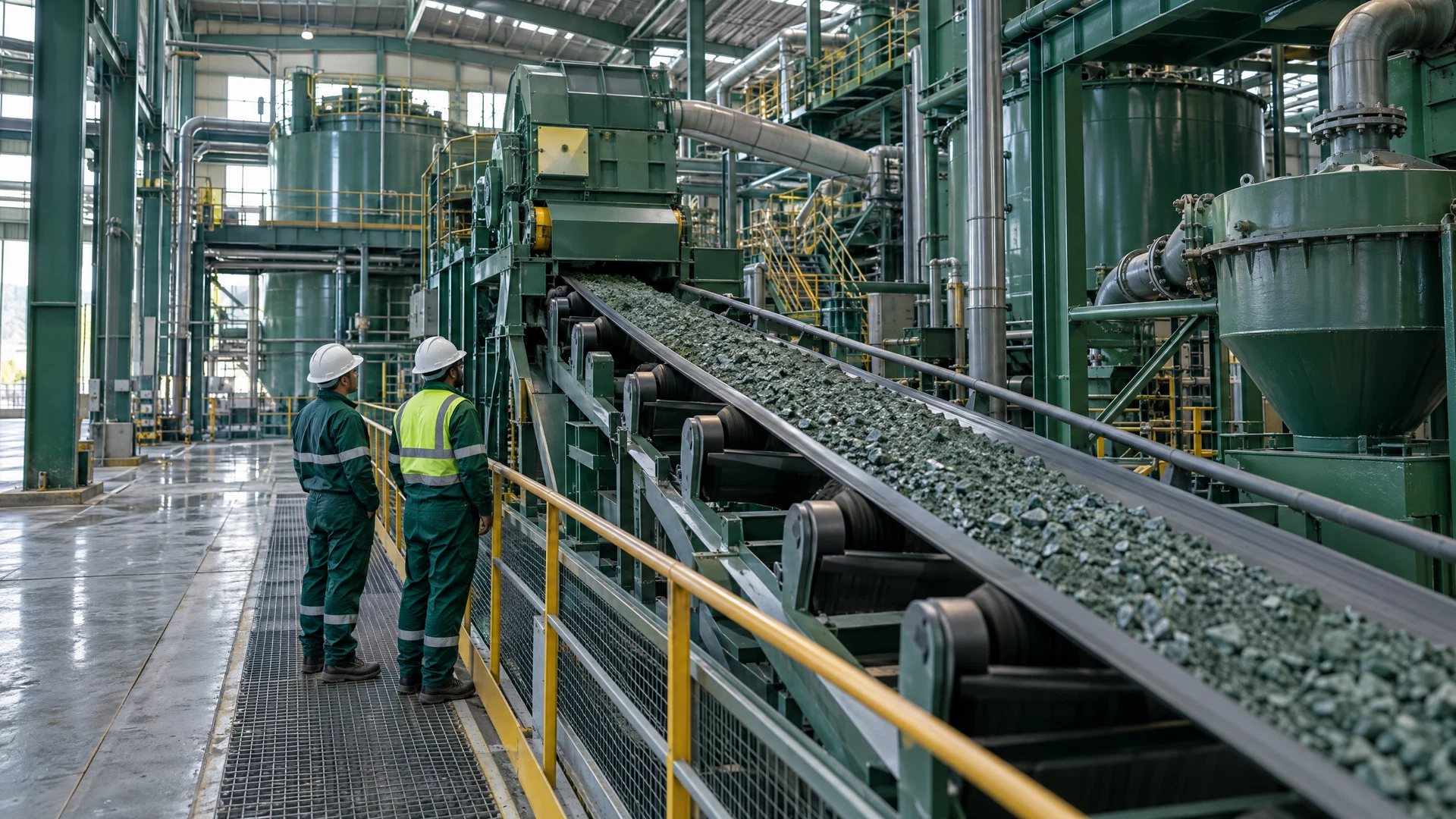
Mapping, sampling and mineralogical work investigate whether a geological occurrence may warrant further assessment.
Where a project is technically, commercially and environmentally advanced, ore or mineral sands are extracted under applicable approvals.
Physical methods such as gravity, magnetic or other separation may concentrate target minerals; the flowsheet depends on the feed and test work.
Monazite concentrates require chemical processing to break down the mineral structure and make rare-earth values available for further treatment.
Solvent extraction, ion exchange or other routes separate chemically similar rare earths into individual products.
Separated oxides can be refined to metals and formulated into alloys with properties designed for specific applications.
Specialist manufacturers turn selected alloys into permanent magnets and finished parts for particular motor, energy and electronics designs.
Monazite is not a finished rare-earth product. Its mineralogy, grain size, associated minerals, element distribution and potential thorium content all matter when considering a route from concentrate to separated products. Any flowsheet must be developed for the actual material through appropriate mineralogical, metallurgical, environmental and radiological test work.
Thorium can occur naturally in monazite. Its concentration during processing may require dedicated radiation protection, dust controls, permitting and responsible management of residues under applicable local requirements.
World Nuclear Association · mineral sands and thoriumJOM · rare-earth processing and environmental considerations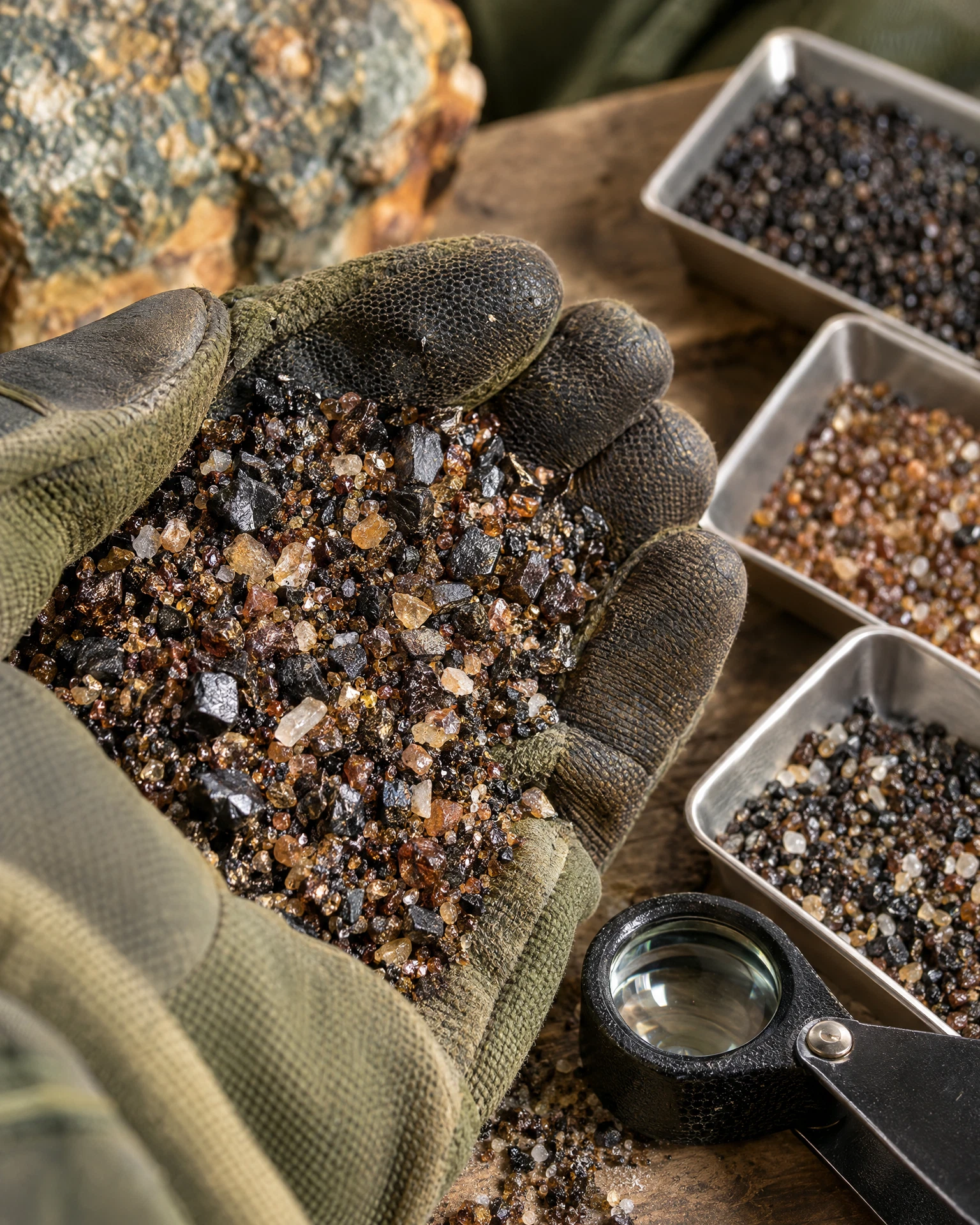
Rare earths are valued for particular magnetic, optical and electronic properties. The element and component depend on the technology design—there is no single rare-earth recipe for every device.
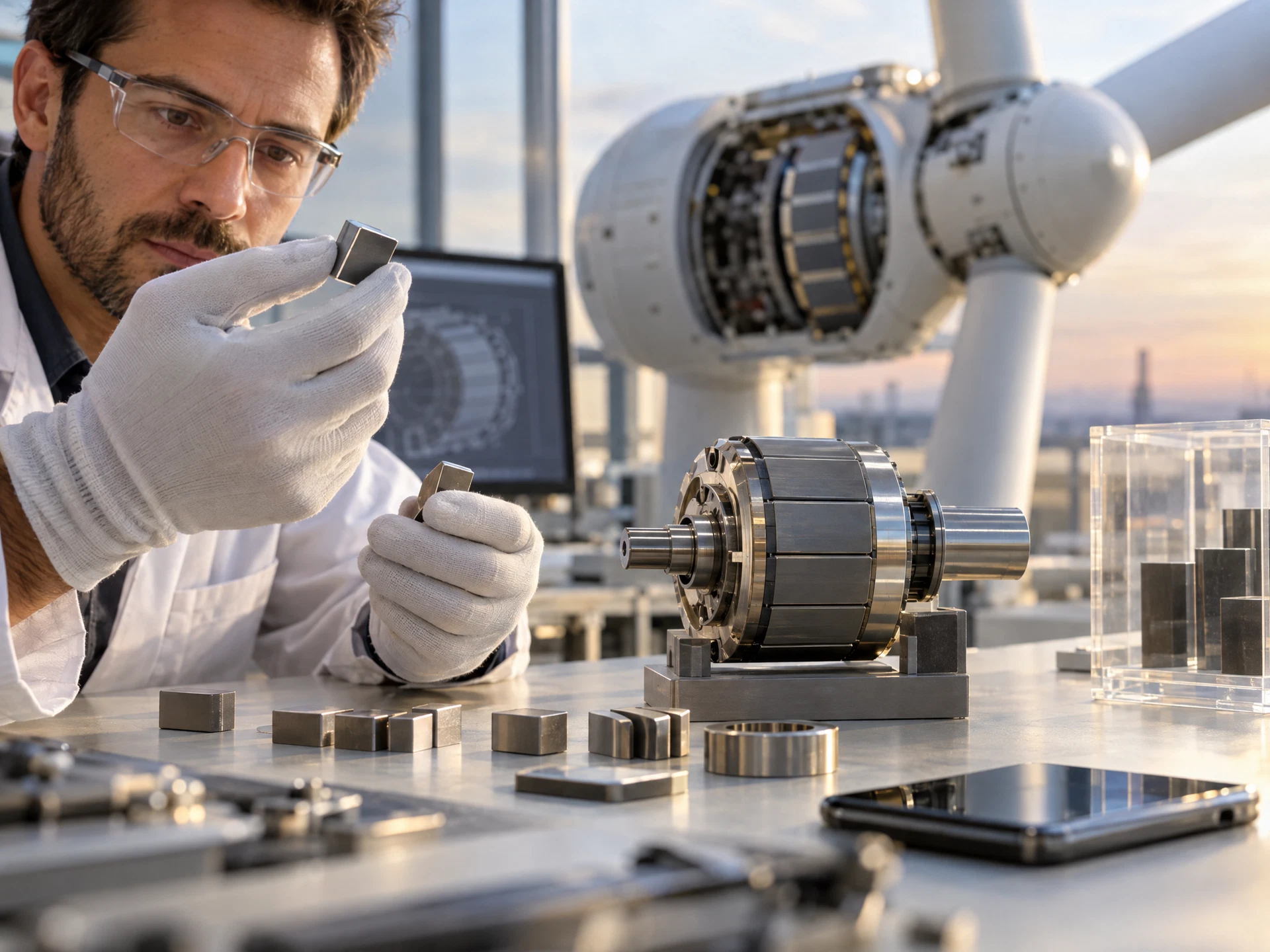
Some direct-drive and other generator designs use neodymium-iron-boron permanent magnets, often with praseodymium and small amounts of dysprosium or terbium. Other turbines use different generator designs and may not rely on rare-earth permanent magnets.
Compact rare-earth magnets help miniaturise components in many phones and electronics, including speakers, microphones and vibration motors. Specific materials vary by component and model.
NdFeB magnets appear in some electric-vehicle traction motors, robotics and industrial motors where compactness and magnetic performance matter. Wound-field, induction and other designs are alternatives.
Particular rare earths have specialised uses in phosphors, optical-glass polishing and fibre-optic signal amplifiers. These applications depend on element-specific properties, not on all rare earths being interchangeable.
The material form, element mix, processing stage and end-use specifications determine where commercial value and supply-chain decisions sit.
Mineralogy and element distribution shape the first processing questions.
Selected alloys become magnets for particular motor and generator designs.
Manufacturers match material properties to demanding component requirements.
An occurrence record is not a resource estimate. Exploration, discovery, mineral-resource reporting and commercial development each require distinct evidence. Our regional perspective is grounded in this distinction.
USGS · Global REE occurrence database